IIIBEAR Product Recommendation: Rivet Screws
【IIIBEAR Product Recommendation】Rivet Screws!
In the world of manufacturing, every detail matters. Just as an artist carefully sketches every stroke on a canvas, engineers pursue the perfect fit of every component. Rivet screws are such a choice that makes engineers' hearts beat. They are not just small metal parts, but the key to ensuring the stability and reliability of mechanical structures.
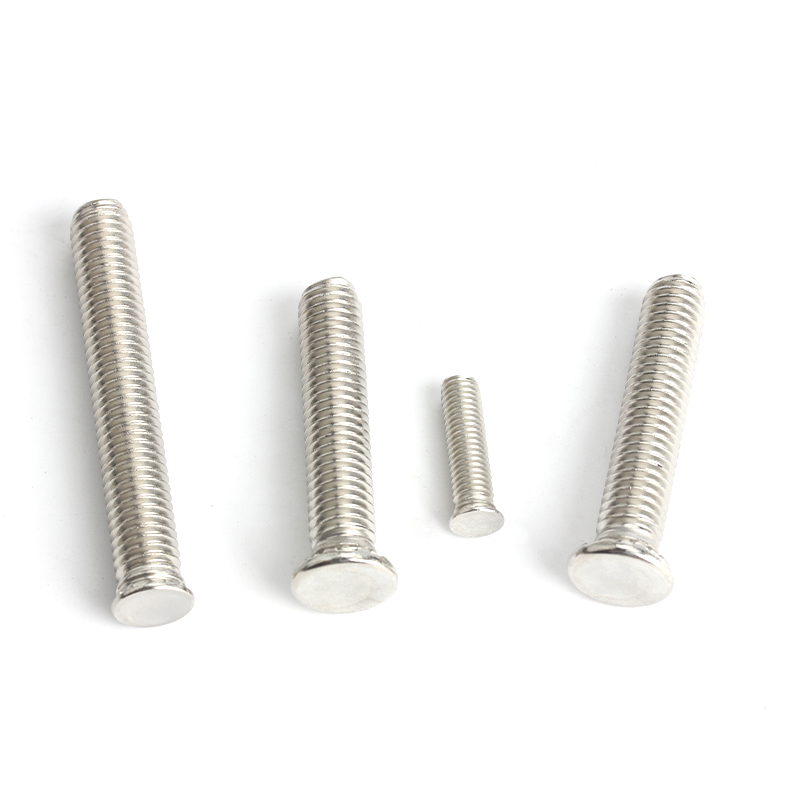
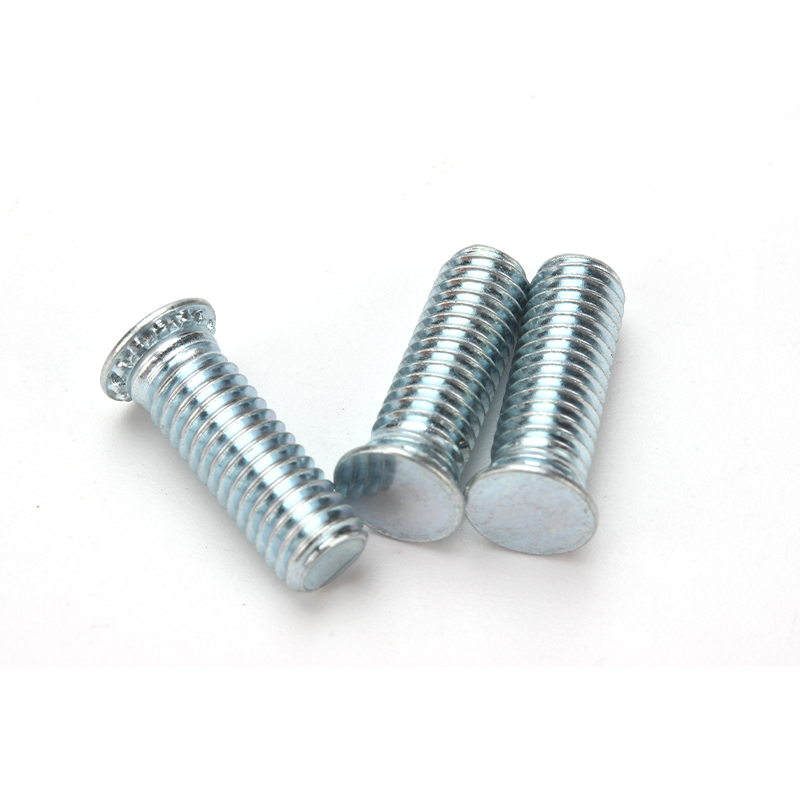
Rivet screws, also known as press-fit screws or rivet bolts, are fasteners designed for thin plates or sheet metal connections. They are tightly combined with thin plates or sheet metal by applying pressure to achieve the function of fixing and connecting.
I. Classification of Common Rivet Screws
According to different material properties, rivet screws are usually divided into the following categories:
01. FH: Carbon Steel Rivet Screws
Plate Application: FH screws are recommended for steel or aluminum plates with HRB (Rockwell "B" measurement standard) 80/HB (Brinell hardness) 150 or lower.
FHS: Stainless Steel Rivet Screws
Plate Application: FHS screws are recommended for steel or aluminum plates with HRB (Rockwell "B" measurement standard) 70/HB (Brinell hardness) 125 or lower.
02. FH4 Rivet Screws (Special for Stainless Steel Plates)
Plate Application: FH4 screws are recommended for steel or aluminum plates with HRB (Rockwell "B" measurement standard) 92/HB (Brinell hardness) 195 or lower.
03. TFH Rivet Screws (Thin Material Screws)
Plate Application: TFH screws are recommended for steel or aluminum plates with HRB (Rockwell "B" measurement standard) 80/HB (Brinell hardness) 150 or lower. This type of rivet screw is suitable for thin plate materials and can provide good fixing and connecting effects.
Choosing the right material and head type of rivet screws needs to be determined according to your specific working conditions. IIIBEAR provides you with professional selection suggestions. Whether you need standard sizes or special customization, IIIBEAR can meet your needs to ensure that you can find the rivet screw solution that meets your requirements.
II. Rivet Screw Installation Method
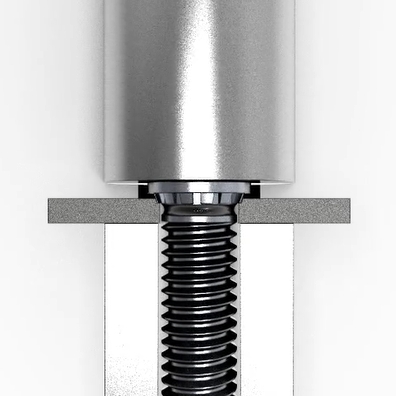
Put the product into the pre-punched or drilled installation hole, and apply pressure to the product according to the standard installation force to make the product installed in place. During the pressure application process, it is necessary to ensure that the plate material discharged from the product head is smoothly and evenly squeezed into the surrounding ribs and grooves. After installation, the surface of the installation plate is flat, the installation effect is reliable, and the product has the performance of withstanding high twist-out force and high push-out force.
Precautions
- Installation must be carried out with a professional riveting machine for installation and riveting.
- The hole must be processed strictly according to the tolerance of +0.08MM, and punching technology is generally used.
- When riveting, be sure to choose a suitable pressure, otherwise the riveting will be unstable or cause damage to the fastener and the riveted part.
III. Common Surface Treatment Solutions for Rivet Screws
The surface treatment of rivet screws mainly includes two methods: electroplating and polishing. For carbon steel rivet screws, electroplating treatment is usually required to improve their corrosion resistance and aesthetics. The colors and types of electroplating are divided into two types: environmental protection and ordinary:
1. Environmental Protection Electroplating
Including environmental protection white zinc, environmental protection color zinc, environmental protection black zinc, environmental protection white nickel, environmental protection blue zinc, etc. These electroplating methods are environmentally friendly and meet the environmental protection requirements of modern manufacturing.
2. Ordinary Electroplating
Including white zinc, blue-white zinc, black zinc, color zinc, white nickel, black nickel, military green, blackening, etc. Although these electroplating methods have lower costs, they may have a certain impact on the environment.
Stainless steel rivet screws generally do not need electroplating because stainless steel itself has good corrosion resistance. They usually only need to be polished to maintain the cleanliness and luster of the surface.
The advantages of surface electroplating treatment are:
- Improve corrosion resistance: The electroplating layer can protect the metal matrix from corrosion and extend the service life of the product.
- Enhance aesthetics: The electroplating layer can provide different color choices to meet the needs of product appearance design.
- Improve mechanical properties: Some electroplating layers can increase the hardness and wear resistance of rivet screws and improve their mechanical properties.
IV. Advantages of Rivet Screws
- Convenient and fast assembly, improving riveting efficiency, and able to meet a variety of design requirements
- No danger in surface processing, suitable for plated materials
- High torque resistance and high riveting strength
- Wide range of applications, can be used for metal plates that can undergo plastic deformation

V. Application Scenarios of Rivet Screws
Rivet screws are widely used, from automobile manufacturing to aerospace, from electronic equipment to mechanical manufacturing, they can provide reliable connections. Whether high-strength fixing is required or performance needs to be maintained in harsh environments, this screw can provide reliable connections. Just like a versatile actor who can show excellent acting skills in drama, film or television series, our screws can play their role in any field.

