ASTM A193 Stud Bolts: Grades, Materials and Applications
ASTM A193 stud bolts are specified for pressure vessels, valves, flanges, fittings, and other equipment where the approved design calls for ASTM A193/A193M bolting. The standard covers several alloy steel and stainless steel grades, so “A193 stud bolt” is an incomplete purchasing description. Buyers need the exact grade, stud dimensions, mating nuts, service conditions, and inspection requirements before requesting a quotation.
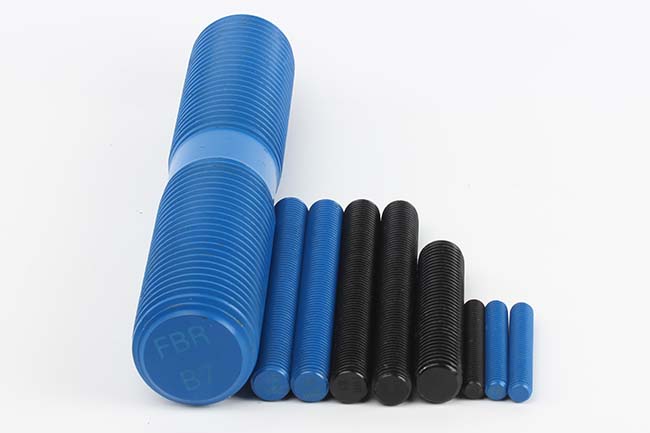
What Does ASTM A193 Specify?
ASTM A193/A193M sets requirements for alloy steel and stainless steel bolting used in high-temperature, high-pressure, or other specified applications. It addresses matters such as material composition, heat treatment, mechanical properties, and testing. The grade tells a supplier which material requirements apply; it does not fully define the shape and dimensions of a finished stud.
A stud bolt is typically a headless fastener used with nuts to clamp a joint. Some are threaded along their full length, while others have threads at both ends and an unthreaded section between them. When reviewing the studs and threaded rods range, identify the exact form shown on the equipment drawing. A generic threaded rod should not be assumed to meet an ASTM A193 grade merely because it has the correct diameter.
Common ASTM A193 Stud Bolt Grades
| Grade | Material family | Main selection consideration |
|---|---|---|
| B7 | Chromium-molybdenum alloy steel | Mechanical and temperature requirements of the approved pressure-joint design |
| B7M | Chromium-molybdenum alloy steel in a controlled-hardness condition | Project hardness restrictions and defined service conditions |
| B8 | Austenitic stainless steel associated with Type 304 | Specified class, mechanical requirements, and corrosion exposure |
| B8M | Molybdenum-bearing austenitic stainless steel associated with Type 316 | Specified class and assessment of the actual corrosive environment |
These grades are different material specifications, not interchangeable names for the same stud. For B8 and B8M, the required class is also part of the selection: a class change can affect processing and mechanical requirements. State the complete designation from the approved drawing or project specification. Examples of product forms are shown on the A193 B7 and B7M alloy steel studs page and the A193 B8 and B8M stainless steel studs page.
How to Choose a Grade for the Application
Pressure Flanges and Valves
Flange and valve joints may use A193 studs when the equipment specification identifies an appropriate grade. Selection must account for the required bolt load, design temperature, gasket, flange arrangement, and approved mating nuts. The operating pressure alone cannot determine the stud grade or diameter. Follow the equipment code and the engineer’s bolting schedule.
Defined H2S Service
B7M is often considered where a project imposes controlled-hardness requirements related to hydrogen sulfide exposure. The B7M designation alone does not establish suitability for every sour environment. Confirm the applicable environmental standard, the actual exposure, and any additional requirements for the stud, nut, coating, testing, and documentation. Substituting B7M for B7 also requires a review of the joint’s mechanical design.
Corrosive Process or External Exposure
B8 and B8M are stainless steel options. B8M’s molybdenum-bearing composition can offer better resistance to certain forms of localized corrosion than B8, but neither grade is suitable for every chemical or chloride exposure. Temperature, concentration, deposits, crevices, and cleaning conditions can change the material choice. A request for “stainless A193 studs” should therefore identify the grade and class rather than leave the selection to the supplier.
Specify the Complete Stud Bolt Assembly
Material grade is only one part of an order. The drawing or RFQ should state the nominal diameter, thread standard and series, pitch, thread class or tolerance, overall length, threaded lengths where applicable, and end details. Check the required number of nuts per stud and whether washers are included. A stud that meets the specified material grade can still be unusable if its length or threads do not fit the flange assembly.
Mating nuts need their own material and grade callout. ASTM A194/A194M covers nut grades used in high-pressure or high-temperature bolting assemblies. A193 B7 with A194 2H and A193 B7M with A194 2HM are familiar purchasing pairings, but the applicable design documents must confirm the final combination. For stainless studs, specify the approved nut grade and condition rather than requesting an unspecified “stainless nut.”
Finishes, Installation, and Inspection
State whether the studs are supplied plain or with a specified finish. A coating may be needed for external corrosion protection, but it can also affect thread fit and assembly friction. The coating process, lubricant, and tightening procedure should be reviewed as a system, especially when the joint has a defined preload or environmental restriction. Stainless steel selection likewise does not remove the need to consider thread galling during assembly.
For critical orders, agree on the inspection and documentation scope before production. Depending on the project, this may include material traceability, chemical and mechanical test results, hardness results, dimensional and thread checks, marking, and a specified certificate format. The quality control overview outlines the information to provide when discussing order-specific checks. Do not assume that every test or certificate is included without stating it in the purchase requirements.
ASTM A193 Stud Bolt RFQ Checklist
- Standard and grade: ASTM A193/A193M, required edition, grade, and stainless steel class where applicable.
- Product form: fully threaded stud bolt, double-end stud, or another drawing-defined component.
- Dimensions: diameter, overall length, threaded lengths, and end configuration.
- Threads: thread form, series, pitch, class or tolerance, and mating component details.
- Assembly: approved ASTM A194 or other specified nut grade, nut quantity, and washer requirements.
- Service: design temperature, pressure, process medium, external exposure, and special environmental requirements.
- Finish: coating, lubricant condition, and any installation restrictions.
- Quality documents: required tests, traceability, marking, inspection scope, and certificate format.
- Order details: quantity, packaging, and delivery destination.
Frequently Asked Questions
Are ASTM A193 B7 and B7M stud bolts interchangeable?
No. They have different material acceptance requirements. Any proposed substitution needs approval against the joint design and service specification.
Does A193 B8M always perform better than B8?
No. B8M may be preferred for certain corrosion exposures, but selection also depends on the required class, mechanical properties, and actual environment. A material change should be reviewed for the whole joint.
Does ASTM A193 determine stud bolt length?
No. Provide the approved drawing or dimensional callout. The required length depends on the flange, gasket, nuts, thread engagement, and assembly arrangement.
Send the complete grade designation, drawing, operating conditions, nut specification, finish, quantity, and inspection requirements through the fastener inquiry page. A clear RFQ allows Flybear Industrial to review the requested stud bolt assembly against the project requirements.

