IIIBEAR Solutions: Fastener Solutions for Construction Industry
IIIBEAR Solutions | Fastener Solutions for Construction Industry
Construction structures come in various forms, mainly divided into wooden structures, reinforced concrete structures, and steel structures. Different countries tend to adopt different construction structures based on their geographical environment, resource conditions, and cultural background. For example, areas or countries with frequent seismic activities tend to use wooden structures with better seismic performance; in some areas or countries where timber resources are abundant and inexpensive, wooden structure buildings are also quite common when the building height is low.
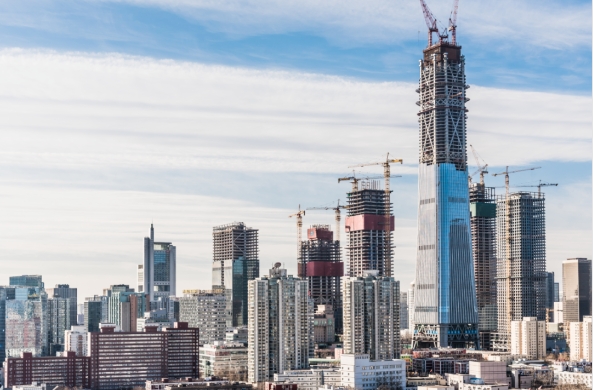
In China, considering its vast geographical distribution, large population base, and emphasis on environmental protection and forest resource conservation, reinforced concrete structures and brick-concrete structures have become the mainstream choices for buildings. These structural types not only meet the functional requirements of buildings but also reflect the considerations of respective countries in terms of sustainable development and resource utilization.
Fastener Solutions for Construction Industry
Facing the countless fastener products in the construction industry, this article selects some common fastener series to help you quickly understand!
01 Fasteners for Reinforced Concrete Buildings
Screws used in reinforced concrete building structures are mainly used to fix, connect, and fasten various components. The following are some common types of screws:
- Foundation Bolts: Used to fix concrete structures to the ground or foundation.
- Double End Studs: Threaded at both ends, used to connect two or more concrete components.
02 Fasteners for Building Curtain Wall Systems
The curtain wall system in buildings is a highly specialized and refined peripheral structure, whose design and construction need to consider various factors, including structural stability, weather resistance, aesthetics, and maintenance convenience. The following fasteners are generally used:
- Particle Board Screws: Used to fix curtain wall panels, with good gripping force and corrosion resistance.
- Self-tapping and Self-drilling Screws: Can drill and tap threads by themselves on materials such as metal, wood, or plastic, suitable for different types of curtain wall materials.
- Carbon Steel Self-drilling Screws: Suitable for the installation of metal curtain walls, providing high-strength connections.
- Expansion Screws: Suitable for fixing curtain wall components on hard materials such as concrete or brick walls.
- Conical Stud: Usually used in the edges and corners of curtain walls, which can connect aluminum alloy keels and walls, fix the support system of glass curtain walls and aluminum alloy curtain walls, and can also be used in stone curtain walls.
- Thread Rods: Used for structural adjustment in curtain wall systems, especially in doors, windows, sunshade systems, etc., for precise control.
- Sealing Rings: Used in fixed sealing scenarios to ensure the sealing performance of curtain walls.
- Hinge: Also known as a hinge or hinge connector, it is a mechanical device used to connect two objects and allow them to rotate relative to each other. In the construction field, especially in curtain wall systems, hinges play a vital role.
The selection of curtain wall fasteners needs to consider the characteristics of curtain wall materials, connection stability, weather resistance, corrosion resistance, and aesthetics. The correct selection and installation of fasteners are crucial to ensuring the long-term performance of curtain wall systems and controlling maintenance costs.
03 Fasteners for Steel Structures in Construction Industry
Steel structure buildings occupy an important position in modern construction engineering due to their high strength, light weight, and fast construction. In steel structure buildings, the use of fasteners is crucial. The following are some common steel structure fasteners:
- Stainless Steel Bolts Nut Screws: Mainly used in curtain wall application scenarios in steel structures.
- T-bolts: Used to fix angle steel or other profiles.
- Combination Screw: Combines the characteristics of bolts and screws, suitable for occasions requiring quick installation and disassembly.
- Hexagon socket head cap screws: The head is cylindrical, suitable for occasions requiring a low protruding head.
- Set Screws: Used to fix rotating parts and prevent parts on the shaft from rotating.
In the field of steel structures, High Strength Bolts with Large Hexagon Head for Steel Structures are key components for fixing and fine-tuning structural supports.
These bolts must strictly follow Chinese national standards (GB), specifically including:
- GB/T 1228 High-Strength Large Hexagon Head Bolts for Steel Structures: The specifications, dimensions, and weights of large hexagon head high-strength bolts, nuts, and washers should comply with design regulations.
- GB/T 1229 High-Strength Large Hexagon Head Bolt Connections for Steel Structures: Covers the composition, technical conditions, and inspection rules of bolt connections.
- GB/T 1230 Technical Conditions for High-Strength Large Hexagon Head Bolt Connections for Steel Structures: Describes in detail the technical requirements for bolt connections.
- GB/T 1231 Acceptance Rules for High-Strength Large Hexagon Head Bolt Connections for Steel Structures: Specifies the acceptance standards and methods for bolt connections.
These bolts must strictly comply with the above standards in the design, manufacturing, and use processes to ensure their reliability and safety in steel structure systems.
GB/T 43151-2023 Weathering Steel High-Strength Bolt Connections for Steel Structures: A national standard drafted by IIIBEAR's factory Flybear, a series of high-strength corrosion-resistant bolt connections, mainly including Grade 8.8, Grade 10.9, Grade 12.9 weather-resistant bolts, nuts, washers, and other complete fastener products resistant to marine atmospheric corrosion.
The selection and use of steel structure fasteners need to consider their load-bearing capacity, corrosion resistance, weather resistance, and compatibility with other components. The correct selection and installation of fasteners are crucial to ensuring the safety and stability of steel structure buildings.
04 Fixing Fasteners
In the construction industry, fasteners play a vital role as key connecting parts to ensure structural stability and safety. Especially in the installation process of pipeline and cable systems, the application of the following professional fasteners is crucial:
- Pipe Clamp: Also called a hose clamp, a fastener used to fix pipeline joints, ensuring the tightness and firmness of pipeline connections through its fastening effect.
- Saddle Clamp: Also known as a pipeline clamp, a fastener used to fix pipelines, which can bear the weight of the pipeline and prevent it from moving or vibrating.
- U-bolts: Used to fix pipelines or cables, etc., and also used to support beams or columns.
05 Plastic Fasteners
In construction electrical installation projects, plastic fasteners are widely used in cable fixing, electrical equipment installation, and other occasions due to their light weight, corrosion resistance, and insulation characteristics.
These plastic fasteners include but are not limited to plastic cable ties, plastic screws, insulating fixing clips, etc. While ensuring the safety and stability of the electrical system, they are also easy to install and maintain. When using these fasteners, their material characteristics, mechanical properties, and compatibility with the electrical system need to be considered to meet the professional requirements and safety standards of electrical installation.
Summary:
In the wave of continuous progress and technological innovation in the construction industry, as the core components of structural connection and fixation, fasteners have increasingly strict requirements for safety, stability, and durability. IIIBEAR strictly implements quality management systems such as IATF16949, ISO9001, PED/AD2000, etc., to ensure that each product meets standards.
When selecting and using fasteners, not only cost and convenience should be considered, but also their quality and safety should be emphasized. To this end, we are equipped with professional inspection equipment to comprehensively detect the performance of fasteners, ensuring that what is provided to customers is not only products but also a traceable and trustworthy quality guarantee.
IIIBEAR will cooperate deeply with the construction industry to jointly promote the industry towards a safer, more efficient, and more sustainable future. The goal of IIIBEAR is to provide comprehensive fastener solutions for the construction industry through continuous technological innovation and strict quality management, laying a solid foundation for the success of each engineering project.
About IIIBEAR
IIIBEAR is committed to becoming a reliable and professional vertical e-commerce platform for fasteners, strictly implementing quality management systems such as IATF16949, ISO9001, PED/AD2000, etc. Based on the nearly 20 years of R&D and production experience in fasteners of Flybear Fastening System, the platform provides customers with comprehensive quality management, accurate supply of standard parts, non-standard parts, brand parts, technical selection, agile services, and intelligent logistics solutions.

