PC Screws for Lightweight and Insulating Fastening Solutions
PC Screws for Lightweight and Insulating Fastening Solutions
PC screws are used in applications that require lightweight fastening, electrical insulation, corrosion resistance, and a clean appearance. In industrial sourcing, the term PC screws usually refers to screws made from polycarbonate, a transparent engineering plastic known for good impact resistance, dimensional stability, and reliable performance in many non-metal fastening applications. For B2B buyers, PC screws can be a useful option when the design goal is to reduce weight, avoid conductivity, or match plastic assemblies more effectively than metal fasteners.
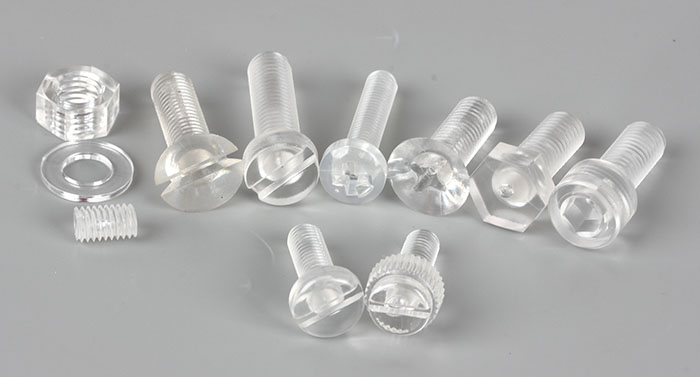
Compared with traditional steel fasteners, PC screws offer a different set of advantages. They are not designed for heavy structural loads, but they can perform well in selected environments where non-metal materials are preferred. This makes them suitable for electronics, plastic housings, display equipment, lighting products, appliance components, and other assemblies where appearance, insulation, and corrosion resistance matter. For distributors and OEM buyers, understanding the limits and strengths of polycarbonate fasteners is essential for selecting the right product.
When sourcing standard and custom fastening products for international projects, many buyers work with IIIBEAR Fastener to simplify product selection across plastic and metal fastener categories.
What Are PC Screws?
PC screws are screws manufactured from polycarbonate material. Polycarbonate is an engineering plastic that is widely recognized for its toughness, transparency, and stable physical properties in many commercial and industrial products. When used in screw production, this material can provide a practical solution for applications that do not require the high strength of metal but still need dependable fastening performance.
PC screws are available in different head styles, thread forms, and dimensions depending on the installation requirement. Common options may include pan head, flat head, round head, slotted, Phillips, and other customized designs for specific assemblies. For B2B procurement, buyers usually check dimensions, thread compatibility, head type, and installation conditions before selecting the correct product.
Key Benefits of PC Screws
One major benefit of PC screws is their light weight. In products where reducing total assembly weight is important, plastic fasteners can support more efficient design and easier handling. This is valuable in electronics, consumer devices, control equipment, and lightweight housings where metal fasteners may add unnecessary mass.
Another advantage is electrical insulation. Because polycarbonate is a non-conductive material, PC screws can be used in applications where conductive metal parts may not be ideal. This makes them useful in electrical assemblies, panels, covers, and enclosure systems where insulation helps improve safety and component compatibility.
Corrosion resistance is also an important reason why buyers choose PC screws. Unlike carbon steel fasteners, polycarbonate fasteners do not rust. In humid or mildly corrosive environments, this can help maintain product appearance and reduce maintenance concerns. For equipment exposed to moisture, indoor industrial humidity, or occasional cleaning agents, non-metal screws may offer practical value.
PC screws can also support product aesthetics. Since polycarbonate can be produced in clear or controlled color variations, it may be selected for assemblies where a more discreet or visually compatible fastener is preferred. This is especially relevant for transparent covers, display fixtures, lighting assemblies, and decorative plastic products.
PC Screws vs Metal Screws
PC screws and metal screws are used for different purposes, so the correct choice depends on the application. Metal screws are typically preferred for high-load, high-torque, and structural fastening. They offer stronger mechanical performance and are often necessary for machinery, construction hardware, and demanding industrial joints.
PC screws, in contrast, are more suitable for non-structural or light-duty fastening tasks where weight reduction, insulation, and corrosion resistance are more important than maximum load capacity. They can also be beneficial when fastening plastic components because they may reduce the risk of damaging sensitive surfaces compared with harder metal fasteners. In some assemblies, the use of plastic screws can also help avoid issues related to metal-to-plastic contact, conductivity, or appearance mismatch.
For procurement teams, the decision should be based on service environment, tightening requirements, long-term load conditions, and the properties of the connected parts. Choosing PC screws simply as a lower-cost substitute for metal hardware is not the best approach. Instead, they should be specified where their material advantages align with real product requirements.
PC Screws in Industrial Applications
PC screws are used in a range of industries where plastic fastening is practical. In electronics and electrical products, they can be applied in enclosure fastening, panel attachment, cover installation, and internal component retention. Their insulating nature makes them relevant in selected low-load electrical assemblies.
In lighting products, PC screws may be used where transparent or non-corrosive fastening is preferred. In appliances and control devices, they can support plastic housings, covers, brackets, and small internal parts. They are also used in display equipment, instrument panels, communication devices, and selected medical or laboratory equipment where lightweight and clean material performance are beneficial.
For OEM projects, custom PC screws may be considered when buyers need special head types, specific dimensions, color matching, or packaging requirements. This is particularly useful for brands that want consistency between fastening components and product housing materials.
How to Select the Right PC Screws
Selecting the right PC screws starts with understanding the application. Buyers should confirm the expected load, installation torque, service temperature, and exposure to moisture or chemicals. Although polycarbonate offers useful mechanical and physical properties, every plastic fastener has performance limits. It is important to match the screw design to the actual working condition rather than relying on material type alone.
Thread type and size are also critical. Diameter, length, head style, and mating part design all affect fastening reliability. If the screw will be used in plastic components, buyers should review whether the assembly needs repeated installation or only one-time fastening. Repeated assembly may affect thread holding over time depending on the design.
Another factor is whether a standard product is sufficient or a custom fastener is needed. Many B2B buyers manage a wide range of product lines, and a one-stop supplier can help combine standard plastic screws with custom fasteners, nuts, washers, and related hardware in one sourcing plan. This often improves communication efficiency and reduces purchasing complexity.
Why PC Screws Matter in B2B Sourcing
PC screws offer value when buyers need a balance of light weight, insulation, appearance, and corrosion resistance. They are not intended to replace every metal fastener, but they are highly relevant in the right product category. For distributors, importers, and manufacturers, understanding where plastic fasteners fit into the supply chain can support better product design and more efficient sourcing decisions.
In global procurement, consistency is just as important as product specification. Buyers often need reliable supply, stable dimensions, flexible packaging, and support for mixed fastener orders. A supplier that understands both standard and custom plastic fasteners can help reduce sourcing risk and support long-term cooperation.
As industrial products continue to use more engineering plastics, PC screws remain a practical fastening option for many non-metal assembly needs. With proper selection and realistic performance expectations, they can contribute to efficient, corrosion-resistant, and visually compatible fastening solutions across a wide range of commercial applications.

Related products: Screws

