PVDF Plastic Fasteners for Corrosion Resistance | IIIBEAR
Why PVDF Plastic Fasteners Are Used in Harsh Industrial Environments
PVDF plastic fasteners are widely used in demanding industrial environments where chemical resistance, purity, and long-term stability are important. For buyers in chemical processing, water treatment, electronics, and renewable energy industries, PVDF fasteners offer a reliable alternative to metal and general-purpose plastic fasteners. Their combination of corrosion resistance, temperature stability, and lightweight performance makes them a practical choice for many engineered applications.
Chemical Resistance of PVDF Plastic Fasteners
PVDF, or polyvinylidene fluoride, is known for excellent resistance to a wide range of aggressive chemicals. In applications where fasteners are exposed to acids, alkalis, solvents, or moisture, PVDF plastic fasteners can maintain stable performance without rusting or degrading like metal fasteners.
Suitable for Corrosive Processing Systems
This material is often selected for tanks, piping systems, pumps, valves, and chemical handling equipment where long-term corrosion resistance is required. For industrial buyers, this can help reduce maintenance frequency and improve service life.
Temperature Stability and Outdoor Durability
PVDF plastic fasteners can perform in both low and elevated temperature conditions better than many common engineering plastics. They also offer strong UV resistance, which makes them useful for outdoor systems exposed to sunlight and changing weather.
Reliable Performance in Indoor and Outdoor Applications
This balance of thermal stability and weather resistance supports use in solar installations, outdoor enclosures, and industrial equipment that must remain reliable over time.
Mechanical Strength and Electrical Insulation
Compared with lower-performance plastic materials, PVDF provides a stronger and more stable fastening solution. It also offers non-conductive properties, which are useful in equipment where electrical insulation is required.
Useful for Sensitive Equipment Assemblies
These features make PVDF plastic fasteners suitable for electronic components, semiconductor equipment, and assemblies where contamination, corrosion, or conductivity must be controlled carefully.
Common Applications of PVDF Plastic Fasteners
PVDF Plastic Fasteners for Chemical Industry Equipment
One of the most common uses of PVDF plastic fasteners is in chemical processing systems. These fasteners can be applied in equipment that regularly comes into contact with corrosive media, helping maintain structural stability without the corrosion risks associated with metal components.
Used in Tanks, Pipes, and Dosing Systems
In these environments, PVDF bolts, screws, nuts, and washers support safe fastening in systems that need dependable material performance under chemical exposure.
Water Treatment and Environmental Systems
Water treatment facilities often require fasteners that can resist disinfectants, treatment chemicals, and constant moisture. PVDF plastic fasteners provide a practical solution in filtration systems, pumps, and purification assemblies.
Helps Improve Service Life in Wet Conditions
Their corrosion-resistant properties make them useful in installations where rust or metal contamination would create maintenance or quality problems.
Electronics and Semiconductor Applications
In electronics manufacturing and clean processing environments, material stability and purity are important. PVDF fasteners are often considered where low contamination risk and reliable insulation performance are needed.
Suitable for Precision Assembly Requirements
These fasteners can support equipment housings, fluid control systems, and specialized assemblies used in sensitive industrial environments.
Solar and Renewable Energy Systems
As renewable energy installations expand, demand for corrosion-resistant and weather-resistant fastening materials also increases. PVDF plastic fasteners can be used in selected photovoltaic and outdoor electrical applications where exposure conditions are challenging.
Supports Long-Term Outdoor Use
UV resistance and environmental stability make PVDF a good option for components installed in exposed outdoor locations.
Types and Supply Options for PVDF Plastic Fasteners
Common PVDF Fastener Types
PVDF fasteners are available in many standard product forms for industrial assembly and maintenance needs.
Typical Products Include
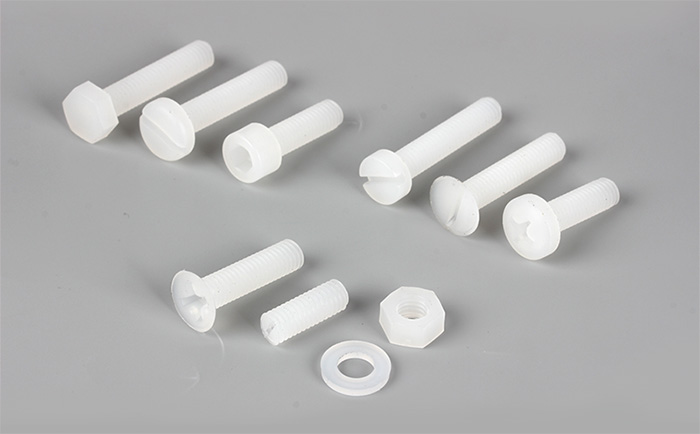
Common options include PVDF bolts, PVDF screws, PVDF nuts, PVDF washers, and other specialty fastening parts used in corrosion-sensitive systems. Buyers may choose from standard thread sizes or request special dimensions depending on the application.
Standards, Dimensions, and Custom Manufacturing
Depending on project requirements, PVDF plastic fasteners can be supplied according to common industrial standards such as DIN, ISO, or other drawing-based specifications. For OEM projects and specialized equipment, custom manufacturing may also be required.
Standard and Non-Standard Supply Support
As a one-stop supplier for industrial fastening solutions, IIIBEAR Fastener can support buyers looking for standard and custom plastic fasteners for corrosion-resistant applications.
How PVDF Plastic Fasteners Compare with Other Materials
PVDF vs Metal Fasteners
Metal fasteners offer high mechanical strength, but in corrosive environments they may require protective coatings or more frequent replacement. PVDF plastic fasteners provide a non-rusting alternative in applications where chemical exposure is a bigger concern than very high structural load.
Better Material Choice for Corrosion Control
Where rust, galvanic reaction, or contamination must be avoided, PVDF can offer a clear material advantage.
PVDF vs General Plastic Fasteners
Compared with materials such as nylon or polypropylene, PVDF generally provides better chemical resistance, better heat resistance, and better long-term performance in demanding industrial conditions.
More Suitable for High-End Industrial Use
Although the cost may be higher than standard plastic fasteners, PVDF is often selected for applications where performance reliability matters more than minimum unit price.
How to Choose the Right PVDF Plastic Fasteners
Review the Operating Environment
Material selection should begin with the actual service conditions. Chemical exposure, working temperature, moisture level, and UV exposure all affect fastener performance.
Match Material to Application Risk
For aggressive chemical systems or outdoor installations, PVDF is often a more suitable option than common plastic materials.
Confirm Product Type and Size
Different assemblies require different fastening forms, thread types, and load capacities. Buyers should confirm bolt, screw, nut, or washer dimensions before purchasing.
Standardization Improves Procurement Efficiency
Using standard sizes where possible can simplify replacement, maintenance, and sourcing across multiple projects.
Evaluate the Supplier’s Custom Capability
For specialized equipment, custom sizes or designs may be necessary. Working with a supplier that can support both standard and customized production can help reduce sourcing complexity.
Useful for OEM and Project-Based Procurement
This is especially important for buyers managing technical drawings, low-volume custom demand, or multi-item sourcing needs.
Conclusion
PVDF plastic fasteners are an effective solution for industrial applications that require chemical resistance, electrical insulation, temperature stability, and outdoor durability. They are widely used in chemical processing, water treatment, electronics, and renewable energy systems where conventional metal or low-grade plastic fasteners may not perform well enough. For buyers seeking dependable plastic fastening solutions, PVDF remains a valuable material choice for both standard and custom requirements.

Related products: Plastic Fasteners

