O-ring Selection, Usage and Maintenance
01 O-ring Seal: The "Silent Guardian" in Industrial Equipment
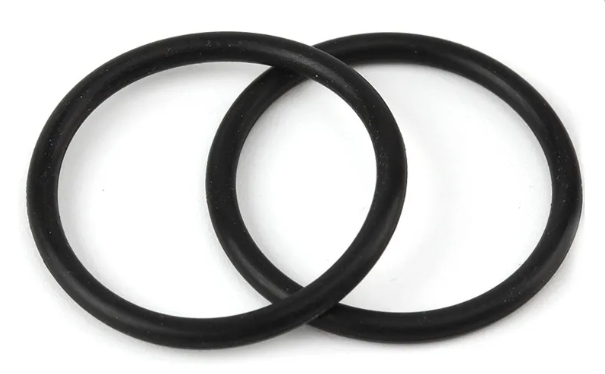
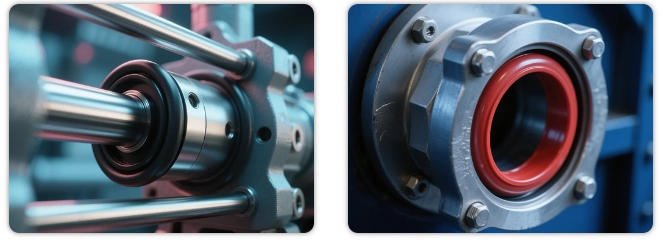
The O-ring seal is an indispensable sealing component in the industrial field. Its circular cross-section design gives it excellent elastic deformation ability, which can efficiently seal media such as water, oil, air, and chemical solvents. Whether in static sealing (such as pipeline flanges, pressure vessels) or dynamic scenarios (such as moving parts of pumps and valves), it can work stably, and even performs excellently in high-precision fields such as semiconductor vacuum sealing.
Its core advantages lie in its simple structure and strong adaptability. It can be used independently or as a basic component of complex sealing systems.
02 Choose the Right O-ring Material for Worry-free Sealing
The key to O-ring performance lies in the matching of materials:
- Nitrile Rubber (NBR): Excellent oil resistance, suitable for conventional industrial environments.
- Fluororubber (FKM): The "double champion" of high temperature resistance and corrosion resistance, often used in chemical fields.
- Silicone Rubber (VMQ): Resistant to low temperatures, suitable for low-temperature scenarios, but avoid high-speed movement scenarios.
-
Polytetrafluoroethylene (PTFE): The "ceiling" of static sealing, with excellent strong corrosion resistance.
Common Materials for O-ring Seals and Their Application Ranges
| Material | Applicable Media | For Dynamic Use (℃) | For Static Use (℃) | Remarks |
|---|---|---|---|---|
| Nitrile Rubber | Mineral oil, gasoline, benzene | 80 | -30~120 | |
| Butyl Rubber | Air, water, oxygen | 80 | -40~120 | Attention should be paid to dynamic use |
| Isobutylene Isoprene Rubber | Animal and vegetable oils, weak acids and alkalis | 80 | -30~110 | Large permanent deformation, not suitable for mineral oil |
| Styrene Butadiene Rubber | Alkalis, animal and vegetable oils, air, water | 80 | -30~100 | Not suitable for mineral oil |
| Natural Rubber | Water, weak acids, weak alkalis | 60 | -30~90 | Not suitable for mineral oil |
| Silicone Rubber | Air, oxygen, weak acids, weak alkalis | -60~260 | -60~260 | Resistant to high and low temperatures, avoid use in moving parts |
| Sulfonated Polyethylene Rubber | High/low temperature oil, oxygen, ozone | 100 | -10~150 | Avoid use in moving parts |
| Polyurethane Rubber | Water, oil | 60 | -30~80 | Abrasion-resistant, but avoid high speed |
| Epichlorohydrin Rubber | Hot oil, steam, air, inorganic acids, halogen solvents | 150 | 20~200 | High temperature resistant |
Golden Rules for O-ring Material Selection:
- Dynamic sealing prefers wear-resistant materials (such as polyurethane).
- High-pressure environments are matched with retaining rings to prevent sealing failure.
- Jacketed O-rings or fluororubber are selected for strongly corrosive media.
03 IIIBEAR Mall Sealing Products
Aiming at different working conditions, IIIBEAR Mall provides the following high-performance solutions:
Standard O-rings
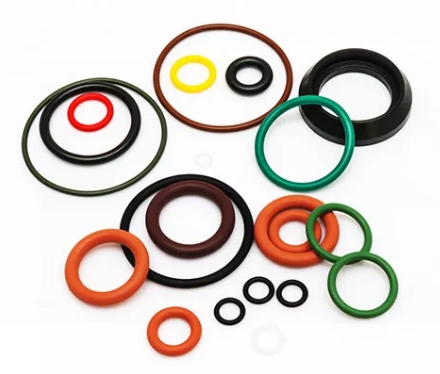
Strong versatility, suitable for international standard sizes, meeting conventional sealing needs; high cost performance, suitable for a wide range of fields such as automobiles and mechanical manufacturing.
Star Seals
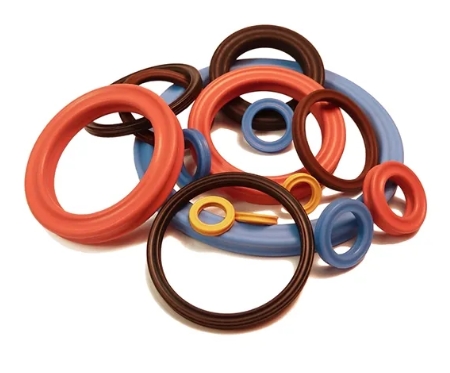
Non-circular cross-section design completely solves the rolling problem of traditional O-rings in reciprocating motion; more stable sealing performance, especially suitable for high-precision scenarios such as hydraulic cylinders and pneumatic equipment.
Jacketed O-rings
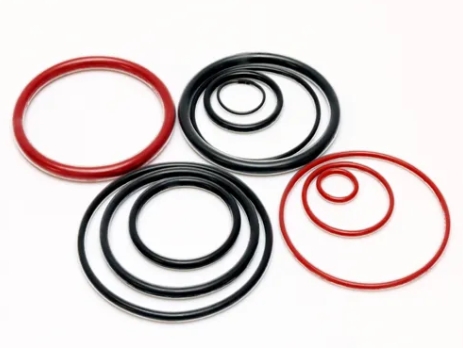
The outer layer is made of chemical corrosion-resistant material, which easily copes with extreme environments such as strong acids and alkalis; wear-resistant and long-life, it is an ideal choice for chemical equipment, compressors, and reaction vessels.
04 Assembly and Maintenance: Details Determine Service Life
Assembly Key Points:
Due to different degrees of initial deformation and different hardness of sealing materials, the magnitude of the compression pressure of the O-ring is also different.
- Control the tensile or compression amount (usually ≤5%) during installation to avoid excessive deformation.
- Poly tetrafluoroethylene retaining rings are recommended for high-pressure scenarios to prevent material extrusion.
- The groove design needs to be precise, and too large a gap will lead to sealing failure.
Storage Tips:
- Avoid light and heat: Store at 5℃~25℃, away from ultraviolet rays and moisture.
- Oxygen prevention: Rubber materials should be kept away from circulating air. This can be achieved by packaging, winding, storing in airtight containers, or other suitable methods.
- Anti-deformation: Elastomeric materials should be placed in a free state as much as possible to avoid tension, compression, or other deformations.
- Anti-contact: Do not allow contact with magnetic materials, cast iron, copper and alloys, or materials that contain those that will damage the rubber. Do not use PVC materials to package seals. Seals of different materials must not be mixed.
Shelf Life and Monitoring:
The shelf life of the seal is determined by the type of material. Under the recommended storage conditions, the approximate shelf life of different materials is as follows:
- Polyurethane, thermoplastic materials: 4 years;
- NBR, neoprene: 6 years;
- EPDM: 8 years;
- FKM, VMQ, fluoro silicone rubber: 10 years;
- PTFE: indefinite.
After the above period, it should be checked before use. After inspection, it may still be used for a period of time.
Even under the above good conditions, rubbers with a thickness of less than 1.5mm are easily oxidized and failed. Therefore, for such products, even within the above years, they must be regularly inspected and tested.

