Essential Fastener Inspections for Special Environments | IIIBEAR
What Are the Essential Fastener Inspections for Special Environments and Industry Applications?
Fastener inspections play a critical role in ensuring the safety, functionality, and longevity of fasteners used in various applications. While basic inspections for fasteners such as screws, bolts, and nuts are essential in every industry, some environments demand more rigorous and specialized testing to meet safety and performance standards. For fasteners used in extreme conditions, such as high temperatures, corrosive environments, or high-stress machinery, the quality assurance process is even more important. This article will explore the essential fastener inspections needed for special environments and industry-specific applications.
Common Google searches related to this topic include “fastener quality control,” “specialized fastener testing,” “fastener inspections for extreme environments,” and “fasteners in critical industries.” In this guide, we will cover the different types of fastener inspections, why they are crucial, and the specific tests required for industries like aerospace, automotive, marine, and chemical processing.
Why Fastener Inspections Matter
Fasteners are integral to nearly every mechanical and structural application. If a fastener fails, it can lead to equipment malfunction, safety hazards, and significant financial loss. Fasteners are often subject to various stresses such as vibration, heat, corrosion, and pressure, and in certain industries, they must meet very specific performance criteria. Without rigorous inspections, fasteners may not meet these requirements and could fail prematurely under operational conditions.
Types of Fastener Inspections
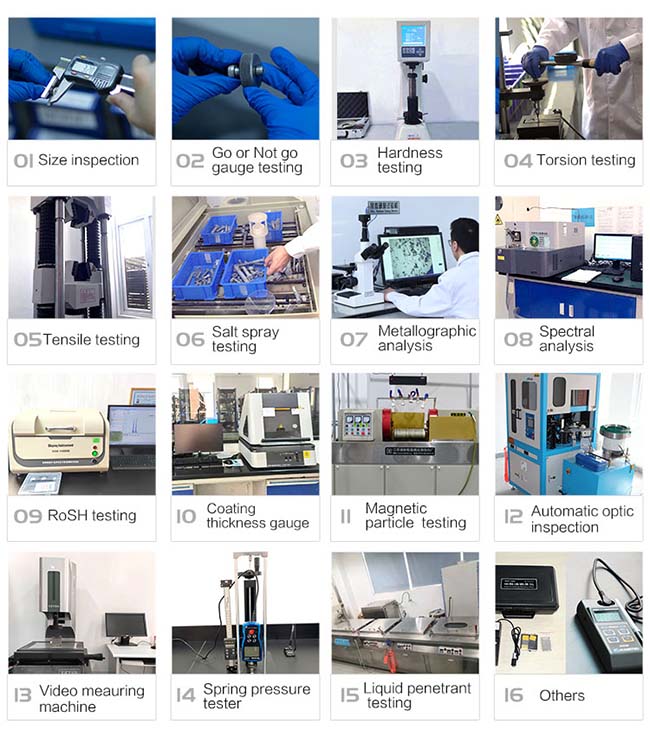
There are various types of fastener inspections that manufacturers and quality control departments use to ensure fastener reliability. These inspections range from visual examinations to advanced testing methods that assess the mechanical properties and durability of fasteners. Below are some common inspection types:
- Visual Inspection: This is the most basic form of inspection. It involves checking fasteners for surface defects such as cracks, dents, or corrosion. A visual inspection ensures that fasteners are free from obvious manufacturing defects that could compromise their performance.
- Dimensional Inspection: Fasteners must meet precise dimensions in terms of thread pitch, length, diameter, and head shape. Dimensional inspections ensure that the fasteners meet the specifications outlined in engineering drawings or industry standards.
- Torque Testing: Torque tests assess the fastener’s ability to withstand rotational forces without stripping or breaking. Torque testing is particularly crucial for fasteners used in high-stress applications where they need to hold tightly under high pressure.
- Hardness Testing: This test measures the fastener's resistance to deformation and is important for ensuring that the fastener can withstand the forces exerted on it during operation. Different materials, such as stainless steel or alloy, require specific hardness tests.
- Tensile Testing: Tensile testing measures the fastener's ability to resist tension or pulling forces. This test is critical for fasteners that will be exposed to high tensile loads, such as those used in structural or automotive applications.
- Corrosion Resistance Testing: Fasteners used in corrosive environments need to be tested for their ability to resist rust, oxidation, and degradation. This test can include salt spray testing or exposure to specific chemicals depending on the application.
Specialized Inspections for High-Temperature Environments
Fasteners used in high-temperature environments, such as engines, turbines, or industrial furnaces, must undergo specific testing to ensure they maintain their strength and integrity under extreme heat. Some essential tests for high-temperature applications include:
- High-Temperature Tensile Testing: This test evaluates the fastener’s ability to withstand tensile stress at elevated temperatures. It is crucial for fasteners in aerospace, automotive, and energy sectors, where temperatures can reach hundreds or thousands of degrees.
- Oxidation Resistance Testing: Fasteners in high-temperature environments are often exposed to oxygen, which can cause oxidation. Testing the fastener's resistance to oxidation ensures its longevity and prevents premature failure.
- Thermal Cycling Testing: Thermal cycling simulates the repeated heating and cooling of fasteners in high-temperature environments, helping to identify potential weaknesses such as stress fractures and fatigue.
Corrosion Resistance Inspections for Marine and Chemical Environments
In marine and chemical processing applications, fasteners are often exposed to corrosive elements like seawater, chemicals, and high humidity. Ensuring that fasteners can resist corrosion in these environments is critical for their long-term performance. Some tests for these applications include:
- Salt Spray Testing: Salt spray testing exposes fasteners to a saltwater mist to simulate the corrosive effects of seawater. This test is commonly used for fasteners in the marine industry, where exposure to salt is inevitable.
- Galvanic Corrosion Testing: In some applications, fasteners may come into contact with different metals, leading to galvanic corrosion. Testing for galvanic corrosion ensures that the fasteners will not degrade when exposed to dissimilar metals.
- Chemical Resistance Testing: For fasteners in chemical processing environments, chemical resistance testing ensures the fasteners will not degrade when exposed to harsh chemicals, acids, or bases.
Why Fastener Testing Is Crucial for Critical Industries
Critical industries, such as aerospace, automotive, and power generation, rely heavily on fasteners that can withstand extreme conditions. In these industries, failure is not an option, and the integrity of fasteners is crucial for the safety and functionality of entire systems. Regular fastener inspections help to:
- Ensure safety by preventing the failure of fasteners that could lead to accidents.
- Meet regulatory standards and industry certifications, which often require rigorous fastener testing.
- Reduce downtime and repair costs by identifying defective fasteners early and replacing them before failure occurs.
- Improve the overall reliability of products and equipment, ensuring long-term performance and customer satisfaction.
Fastener Testing Services from IIIBEAR
At IIIBEAR, we offer a wide range of fastener testing services to ensure that your fasteners meet the highest standards for performance and reliability. Whether you're working in high-temperature environments, corrosive settings, or need to meet specific industry requirements, our fasteners undergo rigorous testing to ensure they perform at their best. Contact us today to learn more about our testing services and how we can help you find the right fasteners for your applications.
Conclusion
Fastener inspections are essential for ensuring the safety, performance, and reliability of fasteners in various applications, especially in special environments and industries. Whether you’re dealing with high temperatures, corrosion, or mechanical stress, the right testing and quality control measures can prevent failure and extend the lifespan of your fasteners. At IIIBEAR, we provide high-quality, thoroughly tested fasteners to meet the demanding requirements of your projects.

Related products: Special Material Fasteners

