Applications of Stainless Steel Screws in Spot Welding Machines
Applications of Stainless Steel Screws in Spot Welding Machines
Spot welding machines are widely used in the manufacturing of automobiles, appliances, and sheet metal products due to their high efficiency and strong welding performance. Behind the smooth operation of every spot welding machine lies a critical but often overlooked component — stainless steel screws. These small fasteners ensure the mechanical stability, electrical reliability, and long-term durability of the equipment.
In this article, we will explore the role, material selection, and performance advantages of stainless steel screws used in spot welding machines, and why choosing the right fastener supplier is crucial for your production efficiency.
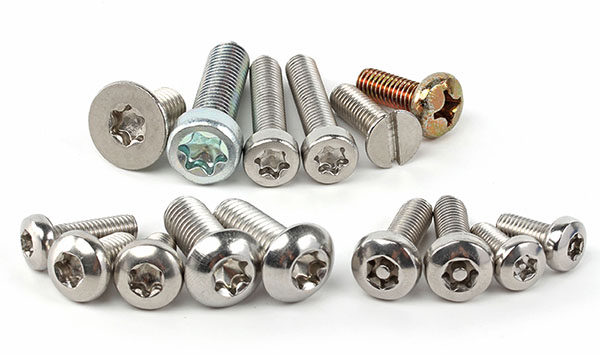
1. The Role of Stainless Steel Screws in Spot Welding Machines
Spot welding machines consist of several key assemblies — electrode arms, transformers, pneumatic systems, control units, and frames. Each part requires secure mechanical connections that can withstand vibration, thermal expansion, and high electrical current.
Stainless steel screws are primarily used in the following areas:
- Electrode fixture assembly: To secure copper electrodes and electrode holders firmly in place.
- Transformer housing: To fix heavy transformer units and maintain vibration resistance.
- Cooling system components: To connect water-cooling pipes and valves.
- Machine frame and panel connection: To assemble the steel or aluminum body structure of the equipment.
- Electrical terminal fastening: To ensure stable current flow and prevent loosening caused by thermal cycling.
These screws must perform reliably under high temperature, high current, and repeated mechanical stress, making stainless steel an ideal choice of material.
2. Why Choose Stainless Steel Screws for Spot Welding Machines
(1) Excellent Corrosion Resistance
Spot welding machines operate in humid, heat-intensive environments. Stainless steel screws, especially grades like A2-70 (304) and A4-80 (316), provide superior corrosion resistance against moisture, cooling water, and welding fumes. This ensures a longer service life and reduces maintenance costs.
(2) High Strength and Stability
The structural components of spot welding machines require fasteners that can maintain tensile and shear strength under continuous vibration and load. Stainless steel screws are engineered for such performance, preventing loosening and deformation during prolonged use.
(3) Thermal and Electrical Safety
During welding, temperatures around the electrodes and transformers can reach several hundred degrees Celsius. Stainless steel retains its mechanical strength at elevated temperatures and resists oxidation — preventing fastener failure that could lead to electrical instability or safety hazards.
(4) Ease of Assembly and Maintenance
Stainless steel screws with precise threads and polished surfaces allow easy installation and removal. For equipment manufacturers, this means faster assembly and easier maintenance, ensuring consistent production quality.
3. Recommended Types of Stainless Steel Screws for Spot Welding Equipment
| Screw Type | Application | Material Recommendation |
|---|---|---|
| Hex socket head cap screws | Frame assembly, transformer mounting | A2-70 / A4-80 |
| Countersunk screws | Electrical panels, cover plates | A2-70 |
| Button head screws | Aesthetic surface fastening | A2-70 |
| Self-tapping screws | Sheet metal enclosures | 410 / 304 |
| Set screws | Electrode holders, rotating parts | 304 / 316 stainless steel |
4. Surface Treatments and Anti-Seizure Measures
Although stainless steel is corrosion-resistant, galling (thread seizure) may occur under high torque or heat. To avoid this, many manufacturers apply surface treatments such as:
- PTFE (Teflon) coating: Enhances lubrication and corrosion protection.
- Passivation: Improves surface oxide film stability.
- Nickel plating or anti-seize compounds: Reduce friction during tightening.
These treatments ensure smooth assembly and longer lifespan of the fasteners under harsh welding conditions.
5. Choosing Reliable Stainless Steel Fasteners for Spot Welding Machines
Selecting the right screw supplier can significantly affect equipment performance and cost efficiency. When choosing stainless steel fasteners for spot welding machines, consider:
- Material traceability: Ensure the stainless steel grade is genuine and certified.
- Dimensional accuracy: Proper fit prevents vibration loosening.
- Surface treatment options: For anti-seize and corrosion protection.
- Customization capability: Non-standard sizes or special coatings for specific equipment needs.
- Quality control: Third-party testing reports for tensile and hardness verification.
6. IIIBEAR — Your Reliable Partner for Stainless Steel Fasteners
IIIBEAR provides a comprehensive range of stainless steel screws and fasteners tailored for welding equipment manufacturers. With over 20 years of experience in fastener production, IIIBEAR supplies high-strength, corrosion-resistant, and precision-engineered screws that meet the demanding conditions of spot welding applications.
Our production facilities are certified with ISO 9001, ISO 14001, and ISO 45001, and equipped with advanced inspection instruments to guarantee consistent quality and delivery efficiency. Whether you need standard DIN screws or custom-designed fasteners, IIIBEAR delivers solutions that improve the reliability and longevity of your welding machines.
Conclusion
Stainless steel screws play a vital role in ensuring the structural integrity, electrical stability, and long-term reliability of spot welding machines. Their superior strength, corrosion resistance, and thermal stability make them indispensable components in modern welding equipment manufacturing.
Choosing high-quality stainless steel fasteners from a trusted supplier like IIIBEAR means greater performance, fewer maintenance issues, and long-term value for your production line.
Related products: Screws, Special Material Fasteners

