Can Stainless Steel and Carbon Steel Fasteners be Mixed?
Can Stainless Steel and Carbon Steel Fasteners be Mixed?
Fasteners are the foundation of industrial construction, widely used in various fields. There are many types of fastener materials. Stainless steel and carbon steel fasteners are popular due to their performance advantages. However, sometimes we wonder whether these two materials of fasteners can be mixed?
This article will guide you to understand the risks of mixing stainless steel and carbon steel fasteners, demonstrate the possible consequences of such mixing with examples, and provide effective solutions to ensure the stability and safety of fasteners in different working environments.
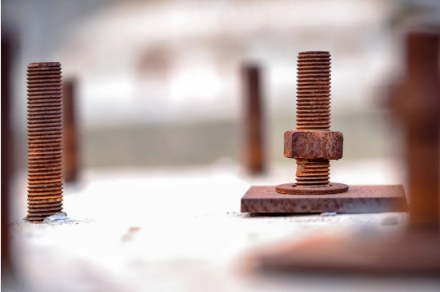
I. Risks of Material Mixing
Part 01: Can Stainless Steel and Carbon Steel Screws be Mixed?
In certain specific situations, such as environments with moisture, high temperature, high pressure, etc., mixing stainless steel and carbon steel screws can lead to electrochemical corrosion.
- This is caused by the potential difference between the two metal materials. The potential of stainless steel is usually higher than that of carbon steel. When in contact, carbon steel acts as the anode and stainless steel as the cathode, forming a microcell, which causes the carbon steel (as the anode) to corrode faster, while the stainless steel (as the cathode) is protected.
Part 02: Can Carbon Steel Screws be Used on Stainless Steel Workpieces?
Although carbon steel screws can be temporarily used on stainless steel workpieces, in the long term, this practice may cause corrosion of the carbon steel screws, affecting the stability and safety of the connection. In outdoor applications and other scenarios, it is recommended to use stainless steel screws of the same material as the workpiece to ensure long-term corrosion resistance and reliability.
II. Application Case Analysis
Case: Rusting of carbon steel fasteners installed on stainless steel workpieces.
For this actual application case, we simulated the application scenario of fastener screws in the IIIBEAR laboratory by connecting carbon steel screws with stainless steel plate workpieces and then conducting a neutral salt spray test.
-
After 48 hours, the surface of the screws not installed on the workpiece showed no change.
Image: Uninstalled screw surface
-
The screws installed on the stainless steel workpiece showed corrosion at the contact gap.
Image: Corrosion at screw contact gap
In practical applications, when carbon steel and stainless steel materials come into contact and are in a humid, high-temperature, or high-pressure environment, electrochemical corrosion may occur. Under such conditions, the corrosion rate of carbon steel screws will accelerate because of the potential difference between carbon steel and stainless steel, making carbon steel the anode and more prone to oxidation (corrosion).
Conversely, stainless steel workpieces can form a dense oxide film due to their high chromium content, which protects the material from further corrosion. However, it should be noted that this protective effect may be compromised by the presence of carbon steel, as the corrosion products of carbon steel may damage the oxide film on the stainless steel surface, reducing its corrosion resistance.
III. Solutions
Based on the above case, it is recommended:
- Unified material selection: In the design and manufacturing process, the fastener material should be basically consistent with the connected component material to avoid potential differences and subsequent corrosion.
- Choose stainless steel fasteners: It is recommended to use stainless steel screws of the same material as the connected component. Stainless steel has good corrosion resistance and can remain stable in various environments, thereby reducing the risk of corrosion. You can purchase stainless steel fasteners on the IIIBEAR Website.
- Use isolation materials: Introduce isolation materials such as insulating washers or other non-conductive materials between the fastener and the connected component to effectively block the flow of current and reduce corrosion caused by potential differences. This isolation layer can not only protect the fastener but also the connected component, extending the service life of the entire structure.
Conclusion
Through the above analysis and suggestions, we can conclude that the consistency of materials and consideration of environmental factors are crucial in the selection and use of fasteners. Avoiding the mixing of different materials such as stainless steel and carbon steel fasteners, or taking appropriate preventive measures, can significantly improve the durability and safety of fastener connections, ensuring the long-term stable operation of the structure.
Related products: Special Material Fasteners

