How to Choose Fastener Surface Treatment
How to Choose Fastener Surface Treatment: Zinc Plating vs Hot-Dip Galvanizing vs Zinc-Nickel vs Zinc Flake—Salt Spray Hours Explained
fastener surface treatment selection is one of the most searched topics because “corrosion resistance” is not a single number. Buyers often compare finishes using salt spray test hours, but the right choice also depends on the environment, the base material strength, friction control for torque, appearance requirements, and the risk of hydrogen embrittlement. If you choose a finish only by the highest salt spray hours, you may overpay or create assembly problems in production.
Common Google searches include “zinc plating salt spray hours,” “hot dip galvanized vs zinc plated bolts,” “zinc nickel plating vs zinc flake coating,” and “ASTM B117 salt spray test fasteners.” This guide explains how each surface treatment works, what typical salt spray performance means in real life, and how to select the best coating system for your fasteners.
What Salt Spray Hours Really Mean (And What They Don’t)
Salt spray hours are typically measured by standardized tests (often referenced as ASTM B117 in many buyer searches). The test is useful for comparing coatings under controlled conditions, but it does not perfectly predict field performance because real environments vary: UV exposure, temperature cycles, wet/dry cycles, chemical exposure, and crevice conditions can change the corrosion mechanism.
Two important salt spray terms appear frequently in specifications:
- White rust: corrosion products on zinc-based coatings (cosmetic but indicates coating consumption).
- Red rust: corrosion of the steel substrate (functional concern for carbon/alloy steel fasteners).
When your customer asks, “How many hours can it reach?” clarify whether they mean time to white rust or time to red rust, and under what coating system and topcoat/sealer.
Zinc Plating (Electroplated Zinc): The Most Common General Finish
Zinc plating is widely used because it is economical, provides decent corrosion protection, and has a clean appearance. It is common for indoor equipment, light outdoor exposure, and general machinery where cost and availability matter.
- Best for: indoor industrial use, mild outdoor, general assemblies.
- Strengths: low cost, good availability, attractive finish (often with clear/blue passivation).
- Limitations: corrosion resistance depends heavily on passivation and sealers; not ideal for high-chloride or harsh outdoor environments.
Process note: electroplating can increase hydrogen embrittlement risk for high-strength fasteners. If you use 10.9/12.9 bolts or other high-strength parts, process control and post-bake requirements are critical.
Hot-Dip Galvanizing (HDG): Thick Coating for Outdoor Steel Structures
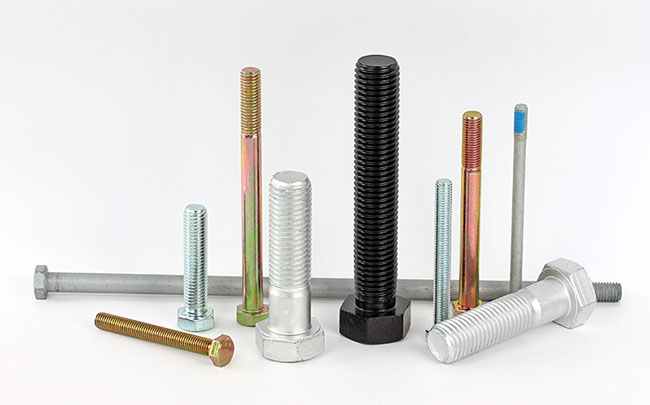
Hot-dip galvanized bolts are popular for structural and outdoor projects where thick zinc coating is needed. Buyers search “hot dip galvanized vs zinc plated bolts” because HDG is visibly thicker and designed for more aggressive outdoor exposure.
- Best for: outdoor steel structures, construction, power transmission, infrastructure.
- Strengths: thick coating, strong long-term protection in outdoor environments.
- Limitations: thicker coating changes thread fit, appearance is rougher, and torque consistency may vary more than thin coatings.
When specifying HDG, it’s important to define thread allowances and mating nut compatibility so installation remains smooth and the bolt-nut pair meets the required fit.
Zinc-Nickel Plating: High Performance for Automotive and Harsh Service
Zinc-nickel plating is often selected when customers need stronger corrosion protection than standard zinc plating, especially in automotive, industrial equipment, and outdoor applications with more demanding requirements. This is why “zinc nickel plating vs zinc flake coating” is a common search phrase.
- Best for: demanding corrosion requirements with controlled appearance and good engineering control.
- Strengths: strong corrosion performance compared to standard zinc plating; can be paired with topcoats for even better results.
- Limitations: higher cost; still requires attention to embrittlement risk on high-strength parts and strict process control.
Zinc-nickel can be an excellent balance when you need improved durability but want a relatively uniform plated appearance.
How to Choose Zinc Flake Coating: High Salt Spray and Strong Edge Coverage
Zinc flake coating (often a non-electrolytic, dip-spin or spray-applied system) is widely used for high corrosion resistance targets and is common in automotive and heavy industry applications. Many procurement teams search for “zinc flake coating salt spray hours” because zinc flake systems often achieve high test results when properly specified with basecoat and topcoat layers.
- Best for: high corrosion resistance targets, complex geometries, and applications needing stable performance.
- Strengths: excellent corrosion resistance potential; good edge coverage; generally lower risk of hydrogen embrittlement compared with electroplated processes.
- Limitations: friction control must be managed carefully (torque-tension behavior depends on topcoat); appearance is not the same as bright plating.
In real sourcing, zinc flake is often specified with defined friction coefficients or torque-tension targets, especially when assemblies rely on consistent clamp load.
Fastener Surface Treatment Selection Based on Environment
Fastener surface treatment selection becomes simple when you map coatings to environments and performance priorities:
- Indoor / low humidity: zinc plating is usually sufficient.
- Outdoor general exposure: consider HDG for structural applications or upgraded systems like zinc-nickel with topcoat.
- Coastal / de-icing salt / high chlorides: zinc flake systems or zinc-nickel with robust topcoat are commonly chosen, depending on the assembly needs.
- High-strength fasteners (10.9/12.9): choose finishes that manage embrittlement risk and define post-treatment controls.
Also consider if the fastener is in a crevice-prone area (under washers, in joints that trap moisture). Even a high salt spray coating can underperform if the joint design traps water and salts.
Salt Spray Hours: How to Discuss Targets Without Overpromising
Customers often ask for a single number: “How many hours?” The safer and more professional approach is to confirm:
- Test method reference: which salt spray standard they will use.
- Failure definition: white rust vs red rust.
- Coating system: basecoat + passivation/topcoat/sealer; thickness requirement.
- Real service environment: inland vs coastal vs chemical exposure.
When you align these details, you avoid disputes later and ensure the coating system matches actual field conditions.
Production Considerations: Torque, Friction, and Assembly Consistency
Corrosion resistance is only part of the story. Coatings can change friction and affect torque-tension performance. For precision assemblies, you should define torque strategy, lubrication policy, and verify clamp load stability. This is especially important when you use zinc flake topcoats or when you have mixed materials in the joint.
Work With a Supplier That Can Specify the Right Coating System
Choosing between zinc plating, hot-dip galvanizing, zinc-nickel, and zinc flake is a system decision—not just a price comparison. At IIIBEAR, we help customers select coating systems based on environment, strength grade, and assembly requirements. We can also support clear RFQ specifications: coating type, test requirements, and performance targets to reduce quality risk and ensure stable production results.
Conclusion
Fastener surface treatment selection should balance corrosion resistance targets, salt spray expectations, assembly requirements, and base material strength. Zinc plating is cost-effective for general use; hot-dip galvanizing is strong for outdoor structural protection; zinc-nickel offers higher performance with a plated appearance; and zinc flake systems can achieve high salt spray targets with strong coverage when specified correctly. Define the test method, the rust definition, and the full coating system to avoid confusion and achieve reliable results.

Related products: Special Material Fasteners, Bolts

