Titanium Bolts: Grades, Applications and Selection | IIIBEAR
Titanium Bolts: Grades, Applications, and How to Choose the Right Fastener for High-Performance Projects
Titanium bolts are selected when engineers need a combination of lightweight design, high strength-to-weight ratio, and excellent corrosion resistance. Compared with standard carbon steel bolts or even many stainless fasteners, titanium fasteners can reduce overall assembly weight while performing reliably in demanding environments such as marine exposure, chemical processing, and high-performance equipment. That is why buyers frequently search for phrases like “Grade 5 titanium bolts,” “titanium bolts for marine use,” “titanium bolts vs stainless steel,” and “titanium hex bolts” when specifying critical joints.
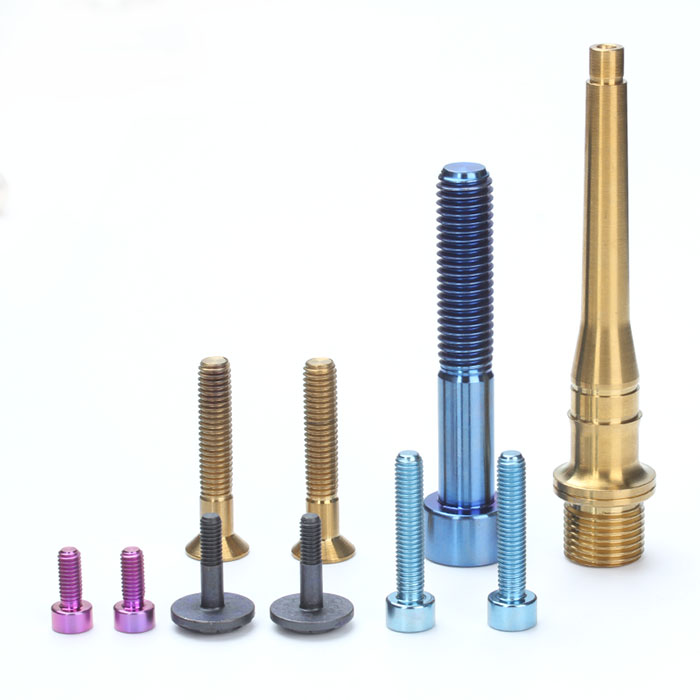
This guide explains what makes titanium bolts unique, the most common titanium grades, where titanium bolts are used, and what you should consider for torque, galling risk, and correct specification. If you want titanium bolts that perform as expected—not just “titanium because it sounds premium”—these selection rules will help.
What Are Titanium Bolts?
Titanium bolts are threaded fasteners made from commercially pure titanium or titanium alloys. Titanium naturally forms a stable oxide layer on the surface, which is a key reason for its strong corrosion performance in many environments. Titanium bolts are manufactured in multiple head styles (hex head, flange head, socket head, button head) and can be produced in metric or inch thread standards depending on customer requirements.
In most sourcing scenarios, “titanium bolt” refers to either commercially pure titanium (often Grade 2) for corrosion-focused use, or Ti-6Al-4V alloy (often Grade 5) for strength-focused use.
Key Benefits of Titanium Bolts
People choose titanium bolts because they solve specific engineering and operational problems:
- Lightweight performance: titanium can significantly reduce bolt weight versus steel, supporting lightweight design goals.
- Corrosion resistance: excellent performance in many corrosive environments, including coastal atmospheres and certain chemical exposures.
- High strength-to-weight ratio: Grade 5 titanium bolts provide high mechanical strength without the weight penalty of steel.
- Non-magnetic: useful for sensitive instruments and special equipment where magnetic interference is a concern.
- Long service life: in the right environment and joint design, titanium can reduce replacement frequency and maintenance cost.
Common Titanium Grades for Bolts
When buyers search “Grade 2 vs Grade 5 titanium bolts,” they are comparing corrosion-first vs strength-first decisions. The most common grades include:
- Grade 2 titanium bolts: commercially pure titanium with excellent corrosion resistance and good ductility. Often used for marine, chemical, and corrosion-sensitive installations where ultimate strength is not the highest priority.
- Grade 5 titanium bolts (Ti-6Al-4V): the most widely used titanium alloy fastener grade. Strong, lightweight, and commonly selected for aerospace, motorsports, and high-performance industrial equipment.
- Grade 23 titanium bolts (Ti-6Al-4V ELI): a low-interstitial version of Grade 5 with improved toughness and fatigue behavior, used for medical and high-reliability applications where fatigue performance matters.
- Grade 9 titanium bolts (Ti-3Al-2.5V): a balanced option used in weight-sensitive projects requiring moderate strength and good formability.
For many industrial customers, Grade 5 is the most requested titanium alloy for bolts, while Grade 2 is preferred when corrosion dominates the requirement.
Titanium Bolts Applications in Real Industries
Titanium bolts applications are strongest where weight reduction, corrosion resistance, or high reliability provide real value:
- Marine and coastal hardware: offshore equipment, coastal structures, and salt-exposed assemblies where standard fasteners may stain or corrode quickly.
- Motorsports and performance automotive: titanium bolts are often used for weight reduction in racing and premium performance upgrades (where design validation supports the choice).
- Aerospace and aviation: titanium fasteners are used across selected assemblies where weight matters and materials are designed accordingly.
- Chemical processing: certain chemical environments can severely attack standard materials; titanium bolts may extend service life in suitable conditions.
- Medical and laboratory equipment: non-magnetic behavior and corrosion resistance make titanium attractive for specialized equipment.
How to Choose Titanium Bolts for Your Project
Selecting titanium bolts correctly is about matching grade, geometry, and assembly method to your real requirements:
- Define the environment: marine atmosphere, chemical splash, outdoor weather, or indoor use. This determines whether Grade 2 or Grade 5 is more appropriate.
- Define mechanical demand: clamp load, vibration, fatigue cycles, and safety factors. Higher stress typically points to Grade 5 or Grade 23.
- Confirm thread standard: metric vs inch, and specify pitch/TPI clearly to prevent mismatch in nuts/tapped holes.
- Choose head type: titanium hex bolts for wrench installation, flange heads for load distribution, or socket heads for compact assemblies.
- Consider surface options: anodized titanium bolts may be used for identification, aesthetics, or specific surface behavior.
Titanium Bolts vs Stainless Steel Bolts: When Titanium Is Worth It
Many buyers search “titanium bolts vs stainless steel” because stainless is widely available and cost-effective. Titanium is typically worth considering when:
- weight reduction delivers measurable performance value (mobility, energy efficiency, handling).
- corrosion exposure is severe and stainless still stains, pits, or seizes in service.
- non-magnetic requirements exist for instruments or sensitive systems.
- long-term reliability and reduced maintenance justify the higher initial cost.
In mild environments with low corrosion risk and no weight constraint, stainless or alloy steel may be a more economical choice.
Torque, Friction, and Galling: What You Must Control
One practical issue often associated with titanium fasteners is thread galling (seizing) under high friction, especially in titanium-on-titanium or titanium-on-stainless thread pairs. To reduce risk:
- use controlled torque processes and avoid over-tightening.
- keep threads clean and free from debris that increases friction.
- define a consistent lubrication policy where appropriate and validate torque-to-tension behavior on real joints.
- for critical assemblies, run verification tests rather than relying only on generic torque charts.
When specified and assembled correctly, titanium bolts can deliver excellent joint reliability with long service life.
Titanium Bolts from IIIBEAR
If you are sourcing titanium bolts for demanding applications, IIIBEAR supports customers with titanium fastener selection, including common grades such as Grade 2 and Grade 5, and custom bolts based on drawings. We help align material grade, thread standards, head styles, and surface options with real service conditions so your project achieves stable performance and consistent quality.
Conclusion
Titanium bolts are a premium solution when you need lightweight design, corrosion resistance, and high strength-to-weight ratio. Choose Grade 2 for corrosion-focused environments and Grade 5/23 when higher strength and fatigue performance are required. Confirm standards and thread details, plan assembly to reduce galling risk, and validate torque behavior for critical joints. With correct specification, titanium bolts can provide long-term reliability and strong overall value in harsh or performance-driven applications.

Related products: Bolts, Special Material Fasteners

